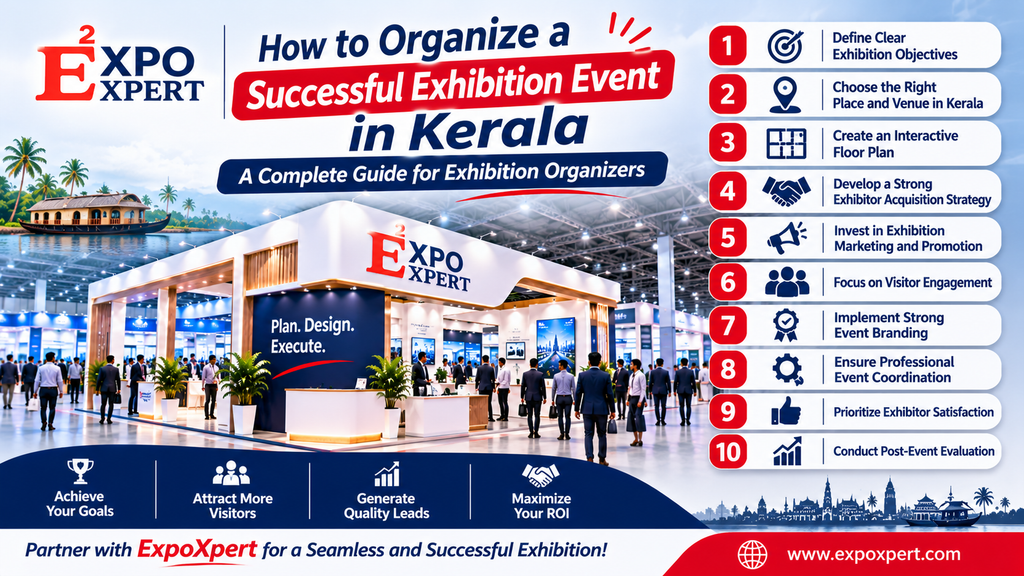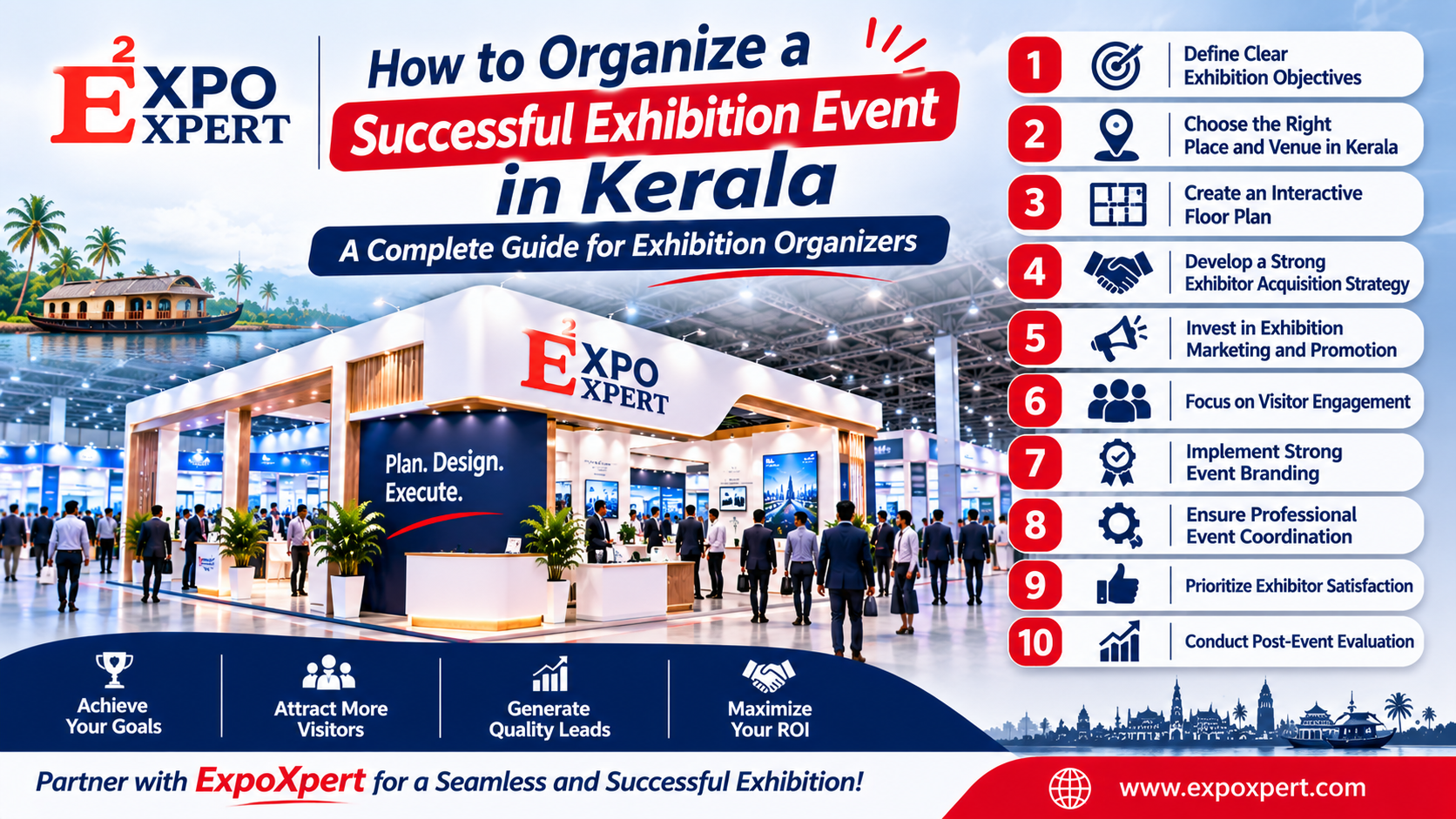
Exhibitions and trade fairs have become one of the most effective platforms for businesses to showcase brand, products, connect with potential customers, and generate valuable business opportunities. With Kerala emerging as a growing hub for B2B trade shows, business expos, education fairs, property exhibitions, and industry-specific events, the demand for professionally managed exhibitions is increasing rapidly.
However, organizing a successful exhibition requires much more than booking a venue and inviting exhibitors. Strategic planning, effective promotion, professional coordination, and seamless execution are essential to ensure both exhibitors and visitors have a positive experience.
In this guide, we’ll explore the key steps to organizing a successful exhibition or trade fair event in Kerala.
1. Define Clear Exhibition Objectives
Every successful exhibition starts with a clear purpose.
Ask yourself:
- Are you aiming to generate business leads?
- Promote a specific industry?
- Create networking opportunities?
- Launch new products or services?
- Increase brand visibility?
Clearly defined objectives help shape every aspect of event planning, from exhibitor selection to marketing strategy.
2. Choose the Right Place and Venue in Kerala
The venue plays a major role in the success of any exhibition.
When selecting a venue, consider:
- Accessibility for visitors and exhibitors
- Parking facilities
- Exhibition hall capacity
- Power and utility availability
- Nearby accommodation options
- Venue reputation
Popular exhibition destinations in Kerala include Kochi, Kozhikode, Thrissur, Kannur ,Malappuram, and Thiruvananthapuram.
A strategically located venue can significantly increase visitor turnout.
3. Create an Interactive and Effective Floor Plan
An organized exhibition layout improves visitor flow and exhibitor satisfaction.
Important considerations include:
- Stall placement strategy
- Registration area
- Main entrance visibility
- Stage and seminar zones
- Food and networking areas
- Emergency exits
A professionally planned floor layout helps maximize exhibitor exposure and visitor engagement.
4. Develop a Strong Exhibitor Acquisition Strategy
Exhibitors are the backbone of any exhibition.
To attract quality exhibitors:
- Create attractive participation packages
- Offer early-bird discounts
- Highlight visitor expectations
- Showcase previous event success
- Provide clear exhibitor support
Building long-term relationships with exhibitors helps ensure repeat participation and event growth.
5. Invest in Exhibition Marketing and Promotion
Even the best exhibition can struggle without proper promotion.
A successful exhibition marketing campaign should include:
Digital Marketing
- Social media advertising
- Facebook and Instagram campaigns
- LinkedIn promotions
- Google Ads
- Email marketing
Offline Marketing
- Newspaper advertisements
- Outdoor hoardings
- Posters and banners
- Direct invitations
- Industry association partnerships
The goal is to reach both exhibitors and target visitors effectively.
6. Focus on Visitor Engagement
Visitor turnout directly impacts exhibition success.
Strategies to attract visitors include:
- Free registration campaigns
- Industry seminars
- Product demonstrations
- Expert talks
- Networking sessions
- Prize draws and giveaways
Creating value for visitors increases attendance and improves exhibitor satisfaction.
7. Implement Strong Event Branding
Consistent branding enhances the professional image of an exhibition.
Important branding elements include:
- Entrance arch branding
- Registration counters
- Directional signage
- Stage backdrops
- Digital displays
- Venue graphics
- Promotional materials
A well-branded exhibition creates a memorable experience and improves brand recall.
8. Ensure Professional Event Coordination
Exhibition success depends heavily on smooth execution.
Key coordination responsibilities include:
- Vendor management
- Logistics planning
- Manpower deployment
- Exhibitor support
- Venue coordination
- Technical assistance
- Security supervision
- Operational monitoring
Professional event coordination minimizes disruptions and ensures seamless event delivery.
9. Prioritize Exhibitor Satisfaction
Happy exhibitors are more likely to return for future events.
Provide:
- Clear communication
- Easy registration processes
- Technical support
- On-site assistance
- Efficient issue resolution
Strong exhibitor relationships contribute to long-term event success.
10. Conduct Post-Event Evaluation
The work doesn’t end when the exhibition closes.
Evaluate:
- Visitor turnout
- Exhibitor feedback
- Marketing performance
- Operational efficiency
- Revenue performance
Post-event analysis helps identify areas for improvement and supports future event growth.
Why Professional Exhibition Management Matters
Organizing a successful exhibition involves multiple moving parts, from exhibitor acquisition and visitor promotion to branding, logistics, and on-site coordination. Working with an experienced exhibition partner helps organizers reduce risks, improve efficiency, and deliver a professional event experience.
Professional exhibition management ensures that every aspect of the event is carefully planned, coordinated, and executed to achieve maximum impact.
Conclusion
A successful exhibition event in Kerala requires strategic planning, effective marketing, professional branding, and flawless execution. By focusing on exhibitor satisfaction, visitor engagement, and operational excellence, organizers can create events that generate real business value and long-term industry recognition.
Whether you’re planning a trade show, business expo, education fair, or industry exhibition, investing in professional exhibition planning and coordination can significantly improve your event’s success and return on investment.
Expoxpert specializes in exhibition strategy, branding, event coordination, stall fabrication, and turnkey exhibition solutions in Kerala, helping organizers deliver impactful and professionally managed 10+ years of exhibition experiences.